
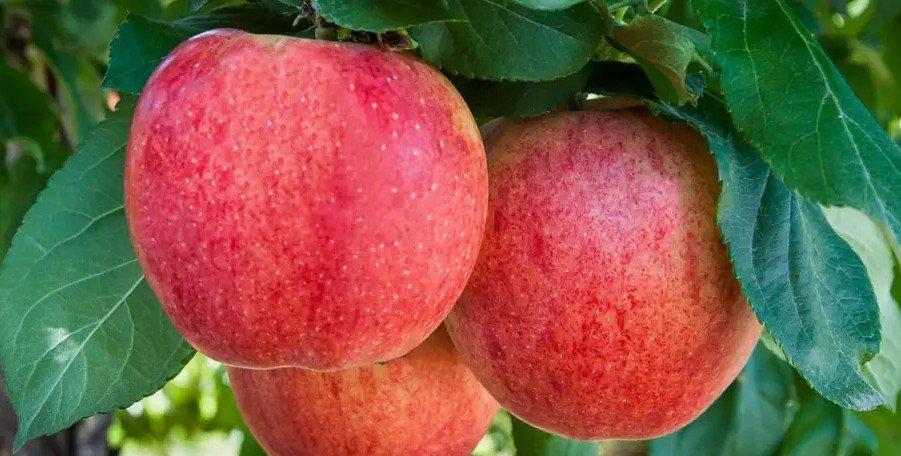
You know the saying: an apple a day keeps the doctor away. What that old proverb never imagined is that scientists would one day be redesigning apples for a changing planet. Forget the fruit of Eden. Today’s apples are being bred not just for flavor, but for climate resilience, market competition, and shifting consumer tastes. After the success of Cosmic Crisp, researchers have introduced a new contender for this unpredictable era: the Sunflare apple.
The Sunflare arrives at a challenging time for apple growers in Washington State, where the industry supports roughly 68,000 jobs, and for growers across the United States. China now produces about 60 percent of the world’s apples, focusing on scale over variety, while trade wars and tariffs have disrupted key export markets for American fruit. On top of that, the last decade has brought a wave of new apple varieties, turning supermarket produce sections into a crowded contest of names, colors, and branding.
Developed by Washington State University, the Sunflare apple, officially known as WA 64, is a cross between Honeycrisp and Pink Lady. It is being promoted as crunchy, juicy, and intensely flavorful, with a balanced sweet-tart taste. Early tastings have described it as smooth, refreshing, and sweet, with some people even preferring it to Cosmic Crisp. Behind it is WSU’s long-running apple breeding program, led by scientists including Dr. Kate Evans and retired breeder Bruce Barritt, a kind of modern Johnny Appleseed for a new agricultural age. Agronomists say Sunflare offers more than great flavor. It also brings the kind of durability needed to handle increasingly erratic weather. In a world shaped by climate change and economic uncertainty, a successful apple now has to be both delicious and resilient.
That pressure is playing out across the broader apple market as well. In the United States, the five leading apple varieties by production and sales are Gala, Red Delicious, Honeycrisp, Fuji, and Granny Smith. Gala now leads as the country’s top-selling and most widely grown apple, while Red Delicious, once dominant for decades, continues to lose ground. Honeycrisp has become a superstar because of its explosive crunch and sweetness, Fuji remains a dependable favorite thanks to its sweet flavor and strong storage life, and Granny Smith still holds its place as the classic tart green apple for baking and snacking. In Canada, Gala and Honeycrisp remain major players, but McIntosh and Ambrosia are also especially popular. Meanwhile, newer varieties are reshaping consumer habits. Cosmic Crisp has already broken into the top five in Washington State and is rapidly becoming one of the most purchased apples in North America.
That is the strange reality of apple innovation today. “A” still stands for apple, but it might just as easily stand for alteration. Creating a new apple is not a quick marketing stunt or a seasonal trend. From the first cross-pollination to a patented commercial variety can take 18 to 25 years, moving at the pace of orchards, seasons, and science rather than market hype. Sunflare may already be appearing in promotional tastings, but shoppers likely will not see it widely on mass-market store shelves until around 2029.
Discover more from Grubbits
Subscribe to get the latest posts sent to your email.