
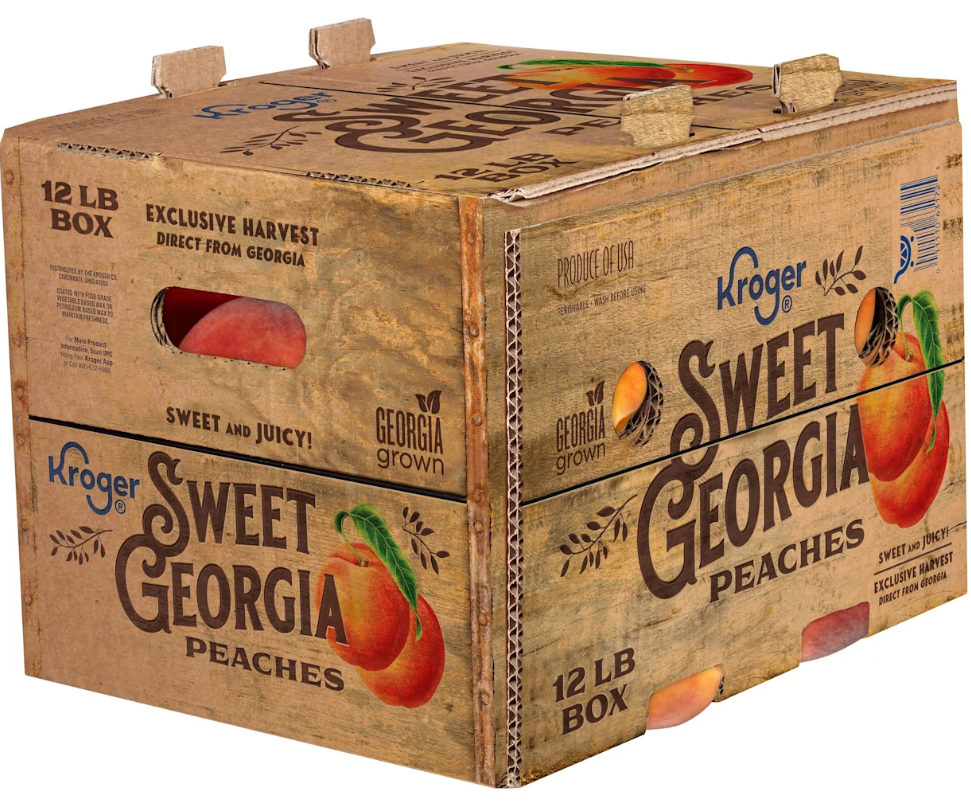
Georgia peaches have become one of America’s most recognizable symbols, even though peaches are not actually native to Georgia. The fruit originally came from China and made its way to America through Europe. While Georgia proudly embraces its Peach State identity, from Atlanta’s Peachtree streets to peach-themed landmarks across the state, the truth behind that nickname is far more surprising.
Early American colonists found peach trees growing across the South, but they were far more interested in cotton, which brought bigger profits through export. Even today, Georgia produces more cotton than peaches. Still, cotton never held onto the same warm, inviting image, and over time, the peach became the symbol that defined the state’s identity and brand.
That symbolism only grew stronger as peaches spread into music, movies, literature, sports, and gaming. The 1996 song “Peaches” by the Presidents of the United States of America turned the fruit into an alt-rock punchline with one of the decade’s most memorable lyrics. Roald Dahl’s James and the Giant Peach gave peaches a magical place in children’s literature, while Princess Peach made the fruit part of video game history. In sports, Ty Cobb was forever known as “The Georgia Peach,” and basketball itself began with a peach basket nailed up as the first hoop.
Canned peaches became widely available in the late 1800s as fruit preservation improved and commercial canneries expanded. By the early 1900s, they had become a standard pantry staple in many homes. The process that made it possible to preserve peaches in jars, and later in cans, can be traced back to French inventor Nicolas Appert, who pioneered airtight heat-processing methods for food around 1809 and 1810.
Peaches have also found a strange second life in digital culture. The peach emoji became one of the internet’s most recognizable symbols, taking on a meaning that had little to do with fruit. At the same time, the peach has stayed tied to sweetness and charm through expressions like “you’re a real peach” and “peachy keen,” keeping its wholesome side intact.
Despite Georgia’s reputation, California produces nearly half of America’s peaches, while China remains the world’s largest producer. Even the fruit itself is more interesting than it looks. Peach fuzz helps protect the skin from insects, disease, and excess moisture, making it more than just a soft outer layer. Peaches have even played a role in history, including a violent 1655 clash near Delaware that began after a peach was picked from a colonist’s orchard.
From orchards and state pride to pop songs, emojis, and famous nicknames, peaches have grown into something much bigger than fruit. Georgia may not have invented the peach, but it helped turn it into a lasting American icon.
Discover more from Grubbits
Subscribe to get the latest posts sent to your email.