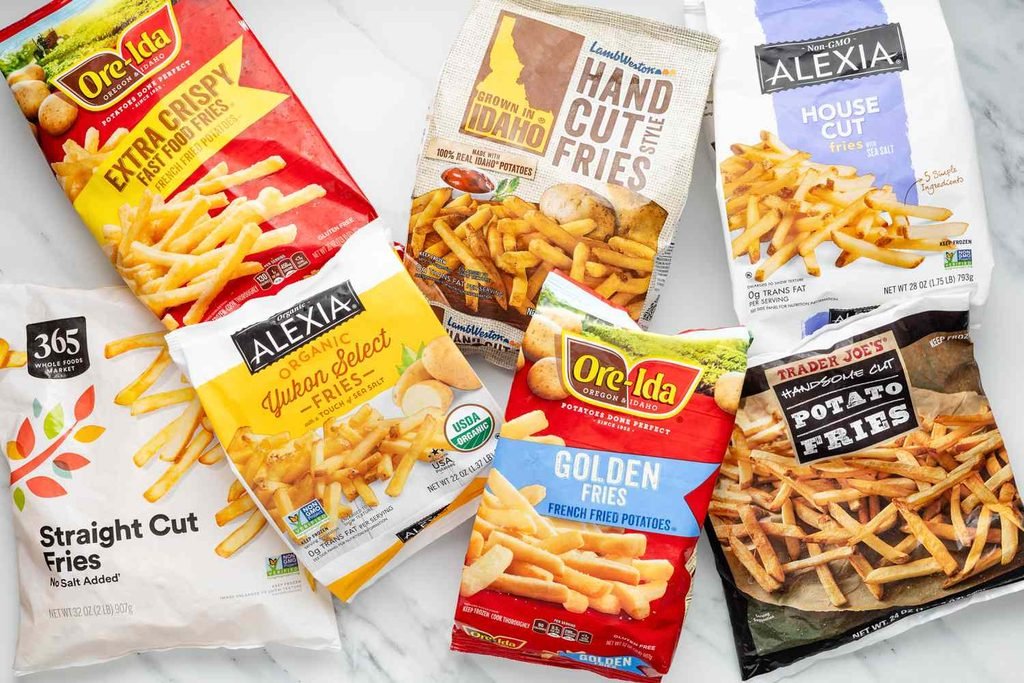
Standing in front of an open freezer and staring at a bag of frozen fries, it’s easy to assume they’ve always existed. Like gravity, electricity and that mysterious bag of peas nobody remembers buying, frozen fries seem less like an invention and more like a basic law of the universe. But that bag sitting beside the ice cream is actually a pretty impressive piece of food engineering, because getting a potato from a field into a freezer and eventually onto your plate without turning it into a soggy mess was no small trick.
Simplot scientists developed a breakthrough process for frozen French fries in the 1940s, with the company making its first commercial sale in 1946. Simplot’s breakthrough helped turn frozen French fries into a commercial product, giving grocery shoppers and food businesses something that had previously required considerably more work. Instead of peeling potatoes, cutting them by hand and dealing with a pile of scraps, you could reach into the freezer and pull out fries that were ready for the oven or fryer. The potato had officially discovered the shortcut.
Once people realized they could have fries without doing all that work, the industry took off. McCain Foods was founded in 1957 and opened its first French fry plant in Florenceville, New Brunswick, helping establish Canada as a major player in the frozen potato business. Then came the really important shift in 1967, when McDonald’s founder Ray Kroc partnered with J.R. Simplot and began moving the chain toward frozen fries. It was a simple change with enormous consequences. Frozen fries could be produced in huge quantities, transported efficiently and cooked with remarkable consistency, giving fast-food restaurants a reliable product without requiring every kitchen to start with a pile of raw potatoes.
Meanwhile, the supermarket freezer was undergoing its own little revolution. Brands such as Ore-Ida made frozen fries a regular part of home cooking, offering families something that once required considerably more effort. No peeler, no knife, no pile of potato skins and no wondering halfway through the process why you didn’t just order fries from somewhere else. Open the bag, spread them on a baking sheet and suddenly you’re cooking. Technically.
McCain eventually became the world’s largest manufacturer of frozen French fries, supplying restaurants and grocery stores around the globe. What began as a technological challenge involving a humble potato became a massive international food industry, changing how restaurants operate and how people prepare one of the world’s most beloved side dishes. The potato had gone from farm crop to industrial product, and nobody even had to touch a vegetable peeler.
And that’s the strange beauty of frozen fries. They look like one of the simplest foods imaginable, but getting them from a field into a bag, through a freezer and onto your plate in a form that actually tastes good required decades of experimentation and some serious industrial ingenuity. So the next time you tear open a bag of frozen fries, give the potato a little respect. You’re not just making dinner. You’re participating in a food revolution that figured out how to make doing almost nothing to a potato feel like cooking.
Nibbles: Frozen fries have a bizarre industrial problem called fry dust, tiny pieces of crust that break off during processing and can end up accumulating in the cooking oil.
Discover more from Grubbits
Subscribe to get the latest posts sent to your email.