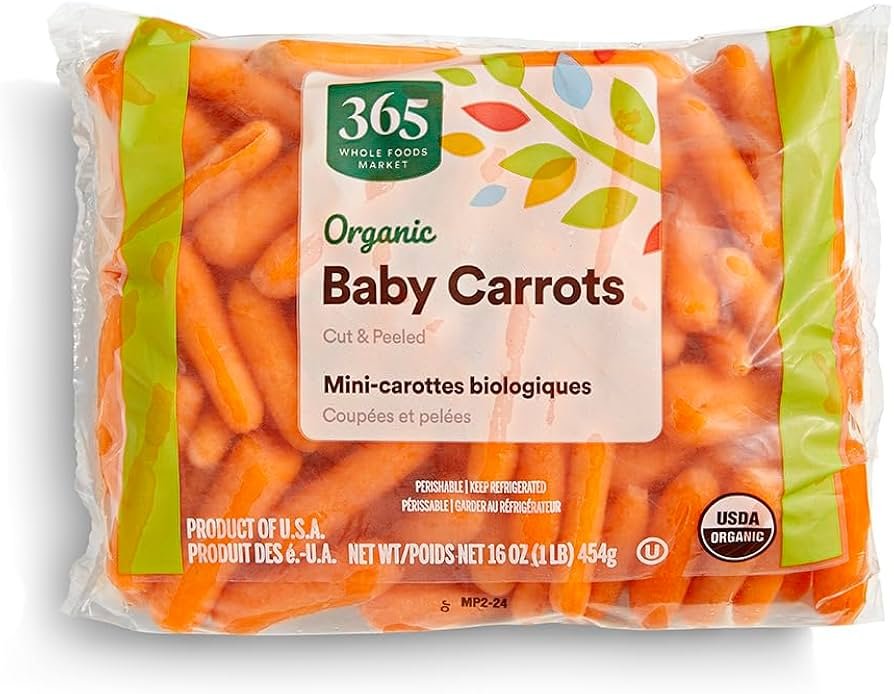
Ever have one of those late-in-life “how did I not know this?” moments? I just had one, and it involved something I’ve been casually eating for years without a second thought: baby carrots. The baby carrot is officially 40 years old this year.
There I was, minding my own business, when it hit me that there’s actually a big difference between baby carrots and baby-cut carrots. And somehow, I had been lumping them together my entire life. Turns out, I’m not alone. A lot of people, kids especially, assume baby carrots are just a naturally smaller, younger version of the vegetable. The packaging doesn’t help either. Most bags simply say “Baby Carrots,” which makes it sound like they came straight from the ground that way.
Here’s where the realization kicked in. Most of what we’re eating are not true baby carrots at all. They are baby-cut carrots, and yes, they are made in a factory. That part alone feels like a plot twist. These are full-sized carrots that have been peeled, trimmed, and cut down into those familiar two-inch pieces. They are then shaped through a process that smooths the edges into that neat, rounded “mini carrot” look we all recognize.
It gets even more interesting. These baby-cut carrots are often made from specific carrot varieties that are grown long and thin on purpose. That way, they can be efficiently cut into multiple uniform pieces. This whole idea didn’t come from a massive food corporation either. It was introduced back in 1986 by Mike Yurosek, a California farmer who was trying to solve a simple problem: food waste. Instead of throwing away imperfect or misshapen carrots, he found a way to reshape them into something snackable and appealing.
And honestly, I have to respect that. What started as a practical solution turned into one of the most successful produce innovations in modern grocery stores. It’s clever, efficient, and it probably got a lot more people, including me, to eat carrots more often.
Next time I shop at the fruits and vegetable section, I will have a full-on Soylent Green moment over there, and honestly, I will be running through the supermarket yelling, “They’re adults! They’re full-grown carrots!” It’s one of those moments where your brain goes, Wait a second… I’ve been happily munching on these “cute little veggies,” and all this time, they were just regular, mature carrots in disguise.
You think you’re eating a baby, but no, these are grown-ups, trimmed, polished, and packaged to look tiny and adorable. Part of me wants to throw a carrot-themed protest: “Stop lying to us, packaging people!” Meanwhile, another part of me just shrugs and munches on my little carrot impostors, because let’s be honest, they taste good.
That said, I can’t ignore the humor in it. There’s definitely a “cuteness factor” at play. Somewhere along the line, we collectively decided that smaller, smoother carrots are more fun to eat. Who knew marketing could make vegetables feel like a lifestyle choice? For a brief moment, I even caught myself wondering what an “adult carrot” looks like in comparison, as if carrots go through some kind of awkward teenage phase before reaching full maturity.
To be fair, real baby carrots do exist. They are simply young carrots harvested early, and you will usually recognize them by their green tops still attached. But they are much less common in typical supermarkets, which means most of us have been happily crunching on their carefully sculpted counterparts instead.
Some people might feel a little misled by the naming, but the more I think about it, the harder it is to be mad. This process reduces waste, makes vegetables more accessible, and turns oddly shaped produce into something people actually want to eat. That feels like a win across the board.
Still, I can’t help but laugh at myself for just figuring this out now. So the next time you reach for a bag of those perfectly shaped “baby” carrots, just know you’re really eating a cleverly rebranded, whittled-down adult carrot. And honestly, that might make them even better.
Discover more from Grubbits
Subscribe to get the latest posts sent to your email.