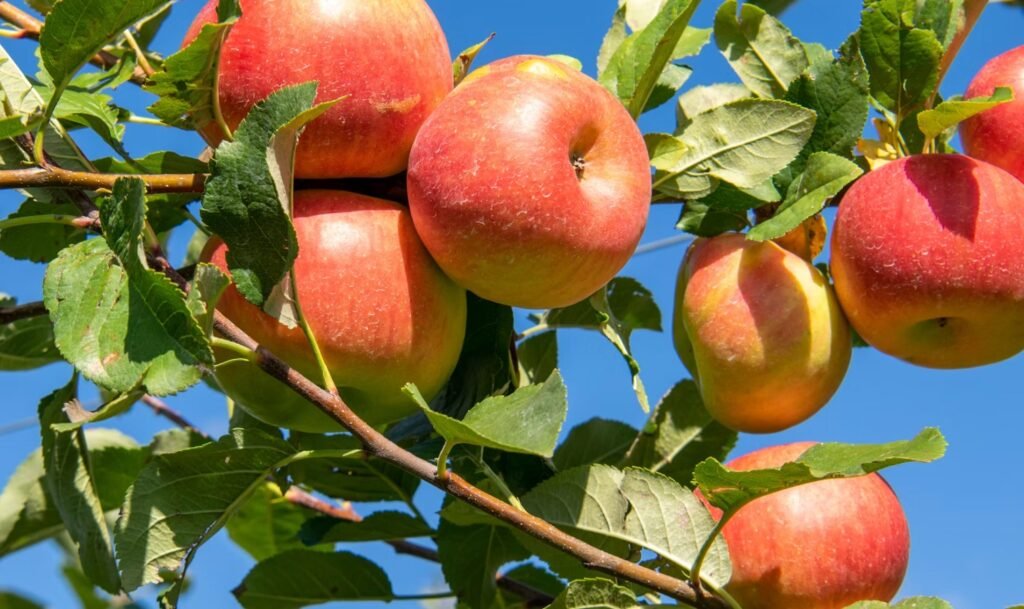
You’re standing in the produce aisle, looking at a pile of apples and checking the little stickers to see where they were grown. If you’re Canadian, you may be wondering something you probably never thought much about before: is this apple Canadian, or did it come from the United States?
Canada grows plenty of apples. In 2024, Canadian farmers produced 386,368 metric tonnes, with Ontario accounting for about 42% of the national crop. Quebec produced another 118,157 tonnes, its largest apple crop on record.
But we also import a lot of apples. Agriculture and Agri-Food Canada reports that more than 80% of Canada’s fresh apple imports came from the United States during the 2018/19 through 2022/23 crop years. Close to 80% came from Washington State, with New York and Michigan also supplying Canadian shoppers.
That makes the sticker worth checking if buying Canadian matters to you. An American apple is hardly unusual in a Canadian grocery store. It is part of the supply that keeps our produce sections full.
But there is a much older question hiding behind that sticker: where did the apple itself come from?
The answer takes us thousands of kilometres away to Central Asia. Modern domesticated apples have a major part of their ancestry in this region, particularly Kazakhstan, where the wild apple Malus sieversii still grows. USDA research identifies it as one of the major progenitors of the modern apple.
The modern apple is also the product of a long history of hybridization involving several wild apple species. Over generations, those apples developed into the extraordinary variety we know today, from McIntosh and Gala to Granny Smith and Honeycrisp.
So the apple in your Canadian grocery cart has two very different stories. The sticker tells you where that particular apple was grown. Its family tree takes you back to the wild forests of Central Asia.
That is why a simple question in the produce aisle can lead somewhere unexpected. Where did this apple come from? Check the sticker and you’ll know where it was grown. Follow its history and you end up thousands of kilometres away.
Nibbles: Scientists sequencing the Golden Delicious apple genome found about 57,000 genes, more than twice the number then identified in the human genome.
Discover more from Grubbits
Subscribe to get the latest posts sent to your email.