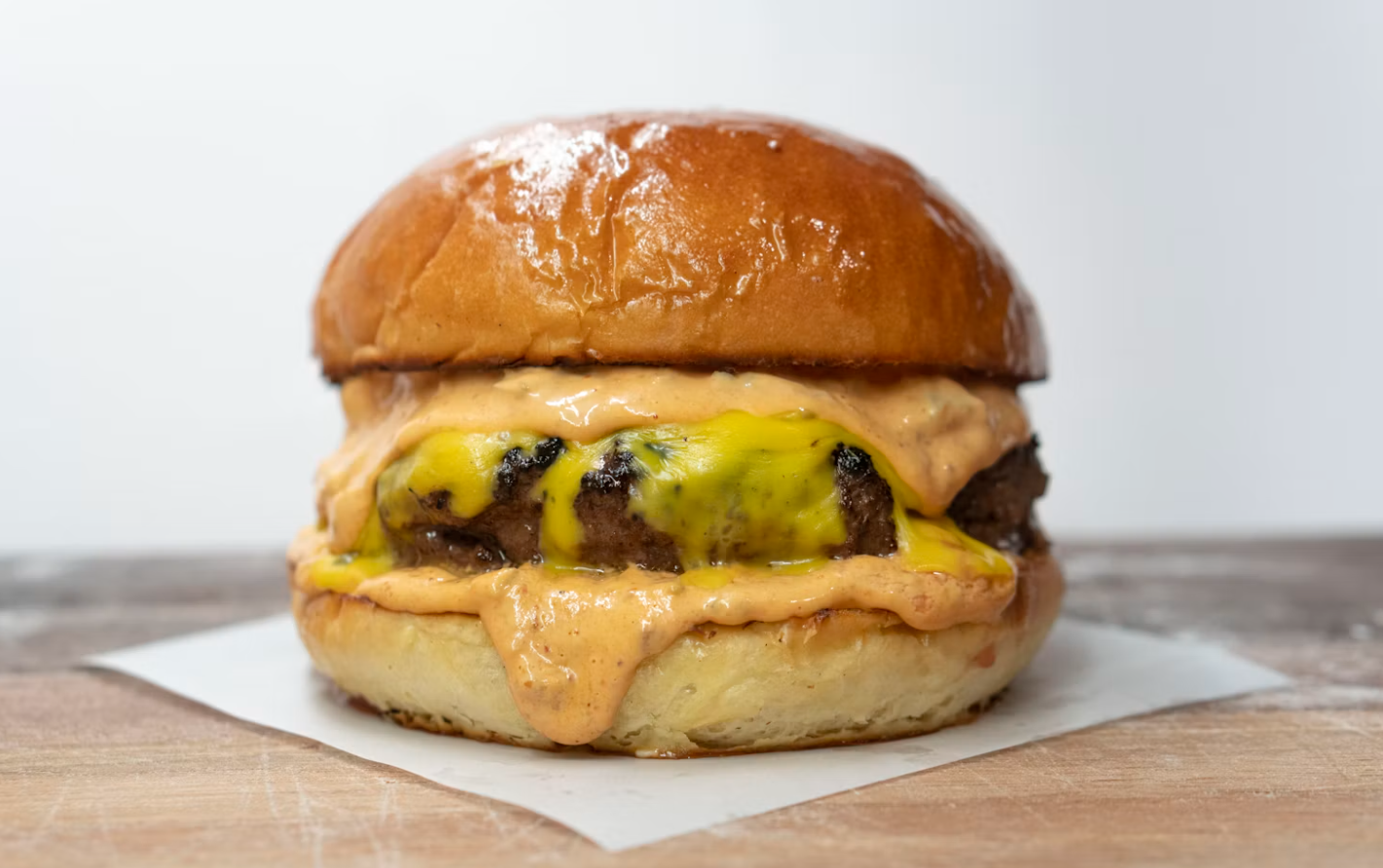
There are foods so familiar that we never stop to wonder who came up with the idea. Nobody looks at a cheeseburger and thinks, “Who was the genius who decided beef and melted cheese belonged together?” We probably should, because the story behind that familiar combination is surprisingly messy.
The story most often credited with creating the cheeseburger begins in Pasadena, California, in 1924. Lionel Sternberger was only 16 and working as a short-order cook at his father’s Rite Spot restaurant when cheese was put on a hamburger. The restaurant called it the “Aristocratic Burger: the Original Hamburger with Cheese,” and a surviving Rite Spot menu gives Pasadena some pretty good evidence for its claim.
The amusing part is that nobody knows exactly how it happened. One version says Sternberger accidentally burned a hamburger and covered the mistake with cheese, while another says a customer simply requested cheese. Either way, somebody discovered that beef and melted cheese made a pretty good team. Pasadena now marks the former Rite Spot location with a plaque.
Pasadena isn’t the only city claiming a piece of the story. Louisville’s Kaelin’s restaurant has long claimed that owner Carl Kaelin created the cheeseburger in 1934. Then there is Louis Ballast in Denver, who took a slightly different approach. In 1935, Ballast filed to trademark the word “cheeseburger” while running the Humpty Dumpty Barrel drive-in.
Ballast was apparently not afraid to experiment. Before settling on cheese, he reportedly tried toppings including peanut butter and chocolate. Thankfully, history chose cheese. His surviving trademark application is real, even though the larger question of who actually invented the cheeseburger remains disputed.
Then the humble cheeseburger got completely out of hand.
In 2012, Black Bear Casino Resort in Carlton, Minnesota, built a bacon cheeseburger weighing 2,014 pounds and measuring about ten feet across. It contained 40 pounds of cheese, 60 pounds of bacon, 50 pounds each of lettuce and onions, and 40 pounds of pickles. Cooking it required a specially built outdoor oven, while a crane helped flip the monster burger. Guinness verified it as the largest burger at the time.
There is also some fascinating food science hiding inside that orange slice of American cheese. Processed cheese contains emulsifying salts that help keep its fat and proteins together when heated. Moisture, fat content and acidity also affect melting, which is why American cheese produces that smooth, glossy blanket over a hot burger instead of separating into a greasy puddle.
And the scale of the cheeseburger business is almost ridiculous. McDonald’s has long been associated with the estimate of more than 75 burgers sold every second worldwide. That’s roughly 6.5 million burgers a day if the rate continued constantly, although the figure is an estimate rather than a current daily sales number published by McDonald’s.
More than a century after that first disputed cheeseburger, we still can’t say exactly who deserves the credit. What we do know is that adding cheese to a hamburger transformed a simple combination of meat and bread into one of the most recognizable foods in the world.
Maybe it was an accident. Maybe it was a customer request. Maybe someone simply looked at a hamburger and thought it could use some cheese. Whatever the reason, it turned out to be a pretty good idea.
Nibbles
In 1938, The New York Times treated the cheeseburger as a strange new California food, alongside oddities like the nutburger and porkburger.
Discover more from Grubbits
Subscribe to get the latest posts sent to your email.