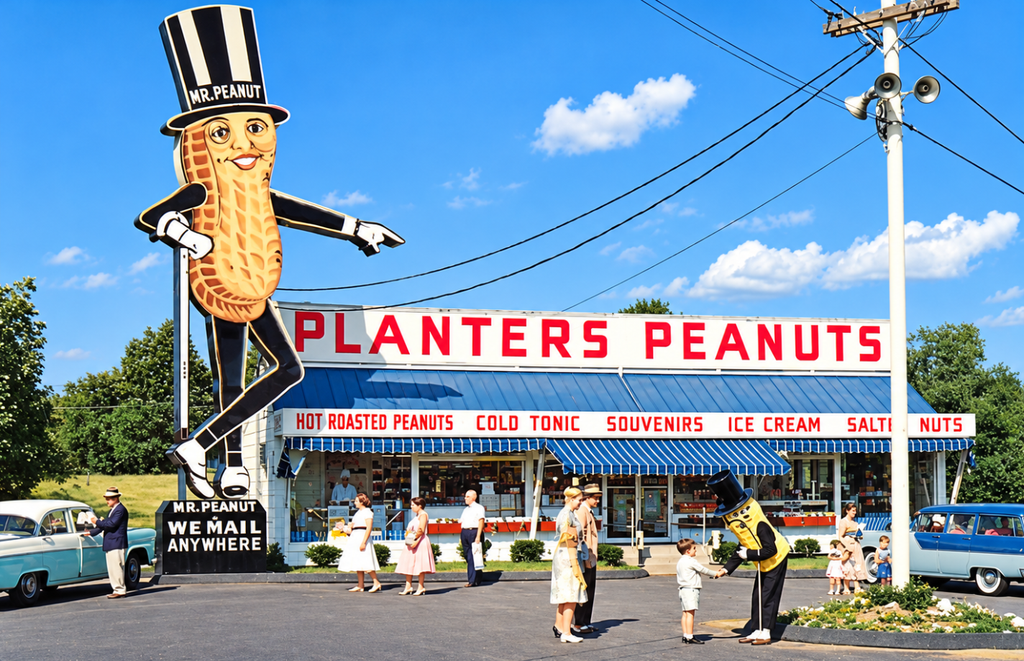
Long before food brands had TikTok, Instagram or influencers fighting for our attention, they had to find a way to make people remember them. Planters came up with a pretty simple answer: turn a peanut into a person. In 1916, the company held a contest for a new trademark, and 14-year-old Antonio Gentile submitted the winning drawing. Planters developed his idea into the character we know today, adding the top hat, monocle, cane, white gloves and spats. By 1917, Mr. Peanut was appearing in newspaper advertising, and a humble snack suddenly had a face people could recognize.
Yes, he has a name. His full name is Bartholomew Richard Fitzgerald-Smythe, which is an awfully fancy name for something you buy by the handful. And that’s the joke. Mr. Peanut was deliberately dressed like an old-fashioned gentleman who probably wouldn’t be caught dead eating peanuts out of a paper bag. The top hat, monocle, white gloves, spats and cane make him look like he inherited a fortune, while underneath all that is a peanut — a cheap, everyday food that grows underground. Planters took one of the most ordinary things in the grocery store and dressed it up like a millionaire.
That little joke turned out to be very good business. Planters didn’t need to explain what a peanut was. The company needed people to remember Planters when they wanted peanuts, and Mr. Peanut gave the brand something a package full of nuts couldn’t provide: a personality. Put him on a package, a newspaper ad, a billboard or a store sign and people knew who they were looking at. By the 1930s, Mr. Peanut had become so recognizable that he was being described as a symbol of the entire peanut industry. A 1920s or 1930s shopper didn’t need a smartphone to recognize a brand. They just needed to spot the guy in the top hat.
Planters also figured out that Mr. Peanut shouldn’t stay on the package. The company opened Peanut Shoppes and used the character in displays, promotions and advertising. Then came the NUTmobile, putting a giant Mr. Peanut presence on the road and bringing the brand directly to consumers. That old postcard image of a Planters store with a giant Mr. Peanut towering over the parking lot says a lot about how food was promoted back then. You didn’t just buy the peanuts. You saw the character, remembered the character and then looked for the character the next time you wanted peanuts.
And here’s something I love about Mr. Peanut: he was silent for almost a century. From his creation until 2010, he never spoke in a commercial. He didn’t need to. The clothes, the monocle, the cane and that unmistakable peanut-shaped body did the work. When Planters finally gave him a voice in 2010, Robert Downey Jr. stepped in. Bill Hader later took over, followed by Keith Ferguson. From one shell head to another, Mr. Peanut had gone from a silent drawing to a full-blown advertising character.
That’s why Mr. Peanut matters. He wasn’t just an early food mascot; he helped establish the idea that the character could become part of the food itself. The grocery aisle eventually filled with personalities built on the same basic idea: Tony the Tiger, Snap, Crackle and Pop, the Pillsbury Doughboy, Chester Cheetah and plenty more. The food companies weren’t just selling cereal, dough or snacks. They were selling characters consumers already knew.
Mr. Peanut even managed to stay relevant long enough to get one of the strangest advertising storylines ever. In 2020, Planters announced his death in a Super Bowl campaign and later introduced Baby Nut. It was completely ridiculous, which was probably the point. After more than 100 years, Mr. Peanut had become something that most food logos never become: a character people could actually care about.
A peanut is pretty ordinary. Give it a top hat, a monocle, a ridiculous name and the attitude of a gentleman who owns three country estates, and suddenly you’ve got one of the most memorable characters in food advertising.
From one shell head to another.
Nibbles
Antonio Gentile reportedly won just $5 for the original Mr. Peanut drawing. The story gets better: Planters founder Amedeo Obici later helped pay for Gentile’s education, including medical school.
Discover more from Grubbits
Subscribe to get the latest posts sent to your email.