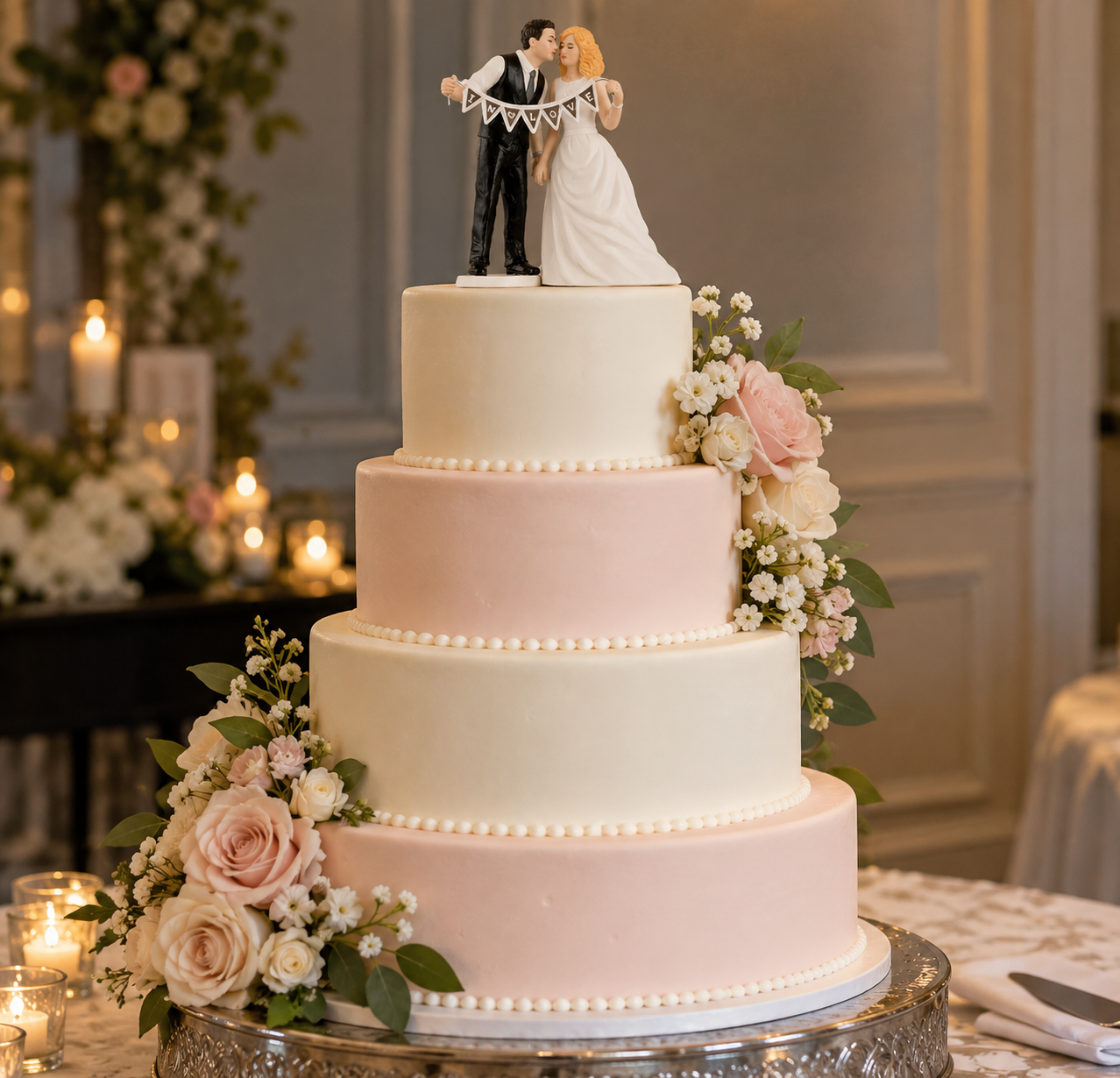
Think about a wedding cake for a minute. It is still cake, made from flour, sugar, eggs, butter, icing and a filling, yet somehow it has become one of the stars of the wedding and can cost thousands of dollars. Then, just to finish things off, we put two tiny people on top. When you stop and look at it, the whole tradition is actually pretty strange.
Wedding cakes have been around for centuries, although they didn’t always look anything like the towering creations we know today. Ancient Roman wedding traditions included grain-based cakes, while later European customs involved breads and other wedding foods connected with fertility and prosperity. During the Victorian era, the white wedding cake took on another meaning. White became associated with purity, but it also represented wealth because refined sugar and finely milled white flour were expensive. A beautiful white cake wasn’t just something to eat. It was something you could afford to show off.
Queen Victoria and Prince Albert’s 1840 wedding helped turn that idea into a much bigger spectacle. Their enormous decorated cake attracted attention, while newspapers helped spread the image of the grand white wedding. As weddings became more visible through photography, magazines and eventually television, the cake became part of the picture of what a wedding was supposed to look like. The cake was no longer just sitting there waiting to be eaten. It had a role to play.
Television and celebrity culture pushed that idea even further. Royal weddings, celebrity weddings and fictional weddings repeatedly showed us the dress, the flowers, the ceremony and, eventually, the cake cutting. Then along came Buddy Valastro, the Cake Boss, turning giant cakes into television entertainment and making the business of cake look like a pretty good career choice. You could almost say he put his kids through college with wedding cakes. I’m kidding, of course, but you get the point. There is some serious money in cake.
And then we get to the price. A wedding cake can cost hundreds of dollars, while elaborate designs, multiple tiers, custom decorations and complicated construction can push the bill into the thousands. You’re not paying thousands just for flour and eggs. You’re paying for the baker’s time, ingredients, fillings, icing, decoration, equipment, refrigeration, packaging, delivery and sometimes putting the whole thing together at the venue. A big wedding cake has to survive the trip, arrive on time and look exactly the way the couple ordered it. That is a lot more responsibility than bringing a birthday cake to the office.
Still, there is an interesting question hiding underneath all of this: how much are we paying for the cake, and how much are we paying because it is a wedding? Consumer Reports found that more than a quarter of comparable wedding vendors quoted higher prices for a wedding than for a 50th-anniversary party. There is an important catch: its bakery comparison did not show a difference because the shoppers asked those bakeries about sheet cakes rather than wedding cakes. So the study can’t prove that wedding cakes universally carry a premium, but it does show that the word “wedding” can make a difference in parts of the industry.
Then there is the topper. Wedding-cake figures date back to the 19th century, with bride-and-groom figures becoming increasingly familiar over time. Eventually couples started replacing the traditional figures with pets, hobbies, sports, cartoon characters and custom versions of themselves. What began as a symbol of marriage became another little way for couples to say, this is us. Personally, I think putting two tiny versions of yourself on top of a cake is one of the more entertaining traditions we have managed to keep alive.
There is also something wonderfully funny about putting all of this on a cake while promising each other “for richer for poorer.” After the dress, venue, flowers, food, photography and a cake that can cost thousands, you might start wondering if the vows should include one more line: and possibly in the poor house after the wedding. At least the cake will be there to make you feel better.
Maybe that’s why the wedding cake has lasted. It started as a simple wedding tradition and somehow became a symbol of purity, wealth, romance and status, with television and celebrity culture helping turn it into an even bigger part of the celebration. Now we can spend thousands on a cake, spend even more on the wedding around it, cut the whole thing into pieces and eat it while two little figures stand there watching the financial damage unfold.
And remember, you promised each other “for richer for poorer.” You might want to keep the receipt.
Discover more from Grubbits
Subscribe to get the latest posts sent to your email.