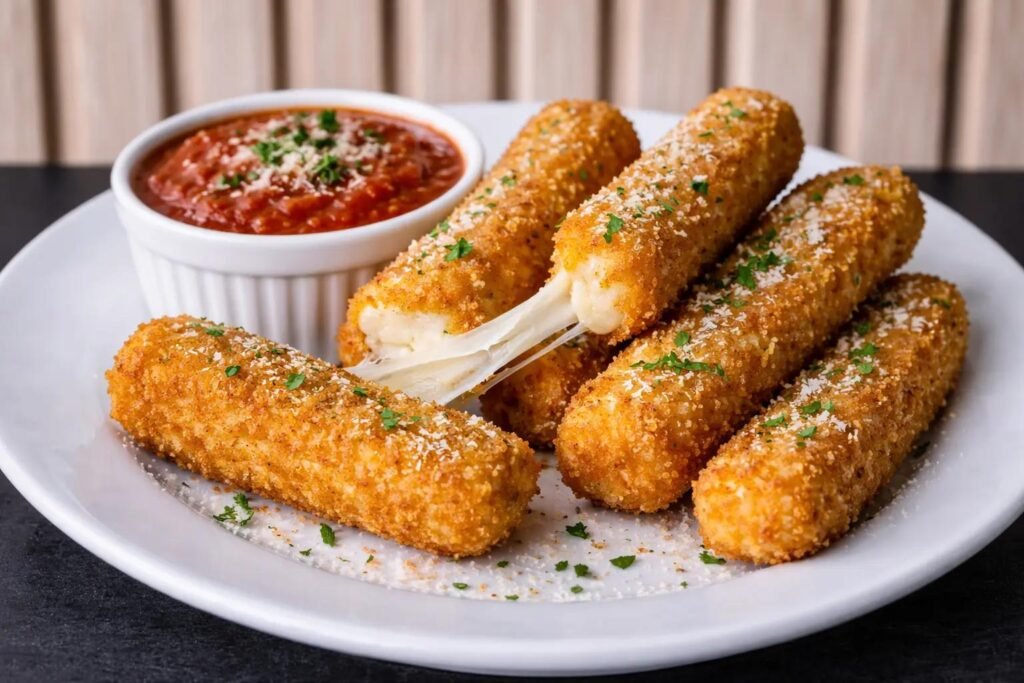
I’ve eaten enough mozzarella sticks in my lifetime to reasonably suspect I’m made of a percentage of them, and it never occurred to me to ask who invented the thing. That’s the trap with perfect appetizers. They don’t feel invented. They feel discovered, like fire, gravity, or the fact that ranch somehow finds its way onto everything.
The problem is, there isn’t one person we can confidently point to. Instead, the mozzarella stick seems to be the result of a very long food relay, with fried cheese getting passed from one place to another until somebody finally figured out that a stick of mozzarella surrounded by crispy breading was a pretty good idea.
The first stop is Paris in 1393, where Le Ménagier de Paris, a medieval household manual, included a recipe called pipefarces. It called for thin slices of cheese to be coated with egg yolk, flour, salt and wine before being fried. It wasn’t mozzarella, and calling it a mozzarella stick would be a serious stretch, but the basic idea was already there: coat cheese and fry it. Six centuries before the sports bar, somebody was already putting cheese in hot oil.
Italy eventually supplied the cheese we actually wanted. Naples became associated with mozzarella in carrozza, a fried sandwich made with mozzarella between slices of bread, coated and fried. It wasn’t a stick either, but now mozzarella and frying had officially met. The basic DNA of the modern appetizer was starting to look familiar.
The modern mozzarella stick appears to have taken shape in America during the 1970s, when mass-produced mozzarella, commercial frying equipment and the growing casual-dining business made fried mozzarella practical as a restaurant appetizer. Wisconsin cheesemaker Frank Baker is often credited with developing snack-size mozzarella strings around this period, although that is not the same thing as inventing the finished breaded stick.
Once restaurants got hold of the idea, the rest was pretty much inevitable. Chains such as TGI Fridays helped turn mozzarella sticks into a familiar American appetizer, and frozen-food production made them easy for restaurants to store and fry whenever somebody sitting at the bar decided vegetables were not happening tonight.
The real trick, of course, is keeping the cheese inside. Anyone who has ever bitten into a badly made mozzarella stick knows that the difference between crispy appetizer and empty breading can be measured in seconds. The breading has to brown while the cheese melts without escaping into the fryer.
That may be the most fitting ending to the story. Nobody seems to have sat down and invented the mozzarella stick in one brilliant moment. Medieval France gave us fried cheese, Naples gave us fried mozzarella, and American food culture turned the idea into something you could order by the basket.
More than 600 years later, we’re still taking hot cheese, covering it in crumbs and dropping it into oil. Some food traditions evolve. Others just get better at what they were doing all along.
Nibbles
The medieval French version was fried in beef marrow, meaning the distant ancestor of your mozzarella stick was basically cheese fried in beef fat.
Discover more from Grubbits
Subscribe to get the latest posts sent to your email.