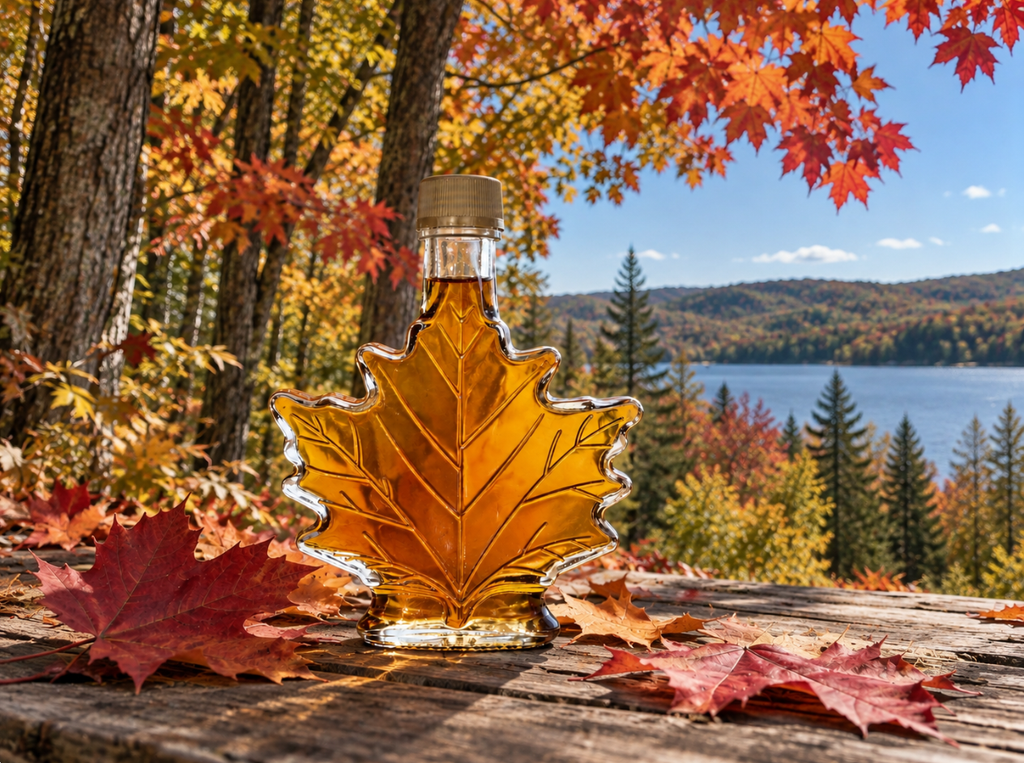
Maple syrup is one of those foods we don’t really think about. It’s just there. There’s probably a bottle in your cupboard, another one at the grocery store, and a pretty good chance the restaurant you’re having brunch at has some tucked away behind the counter. But that little bottle is part of a much bigger business than most of us realize, and Quebec is right in the middle of it.
Canada produces more than 75% of the world’s maple syrup, with about 90% of Canadian production coming from Quebec. In 2025, Canadian maple exports were worth $844 million, with Quebec accounting for $829 million of that total. That’s a lot of pancakes.
The demand isn’t slowing down either. Canadian maple-product exports jumped 15.7% by volume in 2025, reaching 82.4 million kilograms. Quebec producers sold 202 million pounds of syrup, up from 172.5 million the year before, while international sales increased 16.5%. The United States remains the biggest customer, but Quebec syrup is also heading to markets around the world.
This is where Quebec’s strategic maple syrup reserve comes in. It sounds a little ridiculous until you understand why it exists. Maple production depends heavily on the weather, so the industry keeps a supply of syrup in reserve to help smooth things out when a harvest is weak or demand suddenly jumps. Think of it as an emergency pantry, except the pantry contains millions of pounds of maple syrup.
That pantry has been getting a lot of attention. In early 2026, about 35 million pounds of syrup from the reserve were committed to buyers looking to secure supplies. Trade uncertainty between Canada and the United States likely encouraged some of that buying, but tariffs didn’t cause the broader increase in demand. Maple products covered by CUSMA weren’t directly hit by the U.S. tariffs in question.
The bigger issue is that the reserve doesn’t refill overnight. Producers can make more syrup, and Quebec is adding new taps to increase future production, but a good supply cushion takes time to build. Strong demand combined with lower inventories could also put upward pressure on prices, with Quebec producers already warning that 2027 could bring increases.
For Montreal diners, that’s the part worth paying attention to. Maple syrup isn’t just something we pour over pancakes anymore. It’s in desserts, pastries, cocktails, sauces, brunch dishes and plenty of other things chefs can dream up. If the ingredient gets more expensive, eventually restaurants have to notice too.
And maybe that’s the funniest part of this whole story. Something we treat like a breakfast condiment has become a major international food product, with buyers around the world competing for a taste of Quebec. So the next time you reach for that bottle, remember that you’re not just adding sweetness to your French toast.
You’re pouring a little piece of Quebec’s food economy onto breakfast.
Nibbles
Maple syrup has its own unique compound called quebecol, created during the boiling process. It has been found nowhere else in nature.
Discover more from Grubbits
Subscribe to get the latest posts sent to your email.