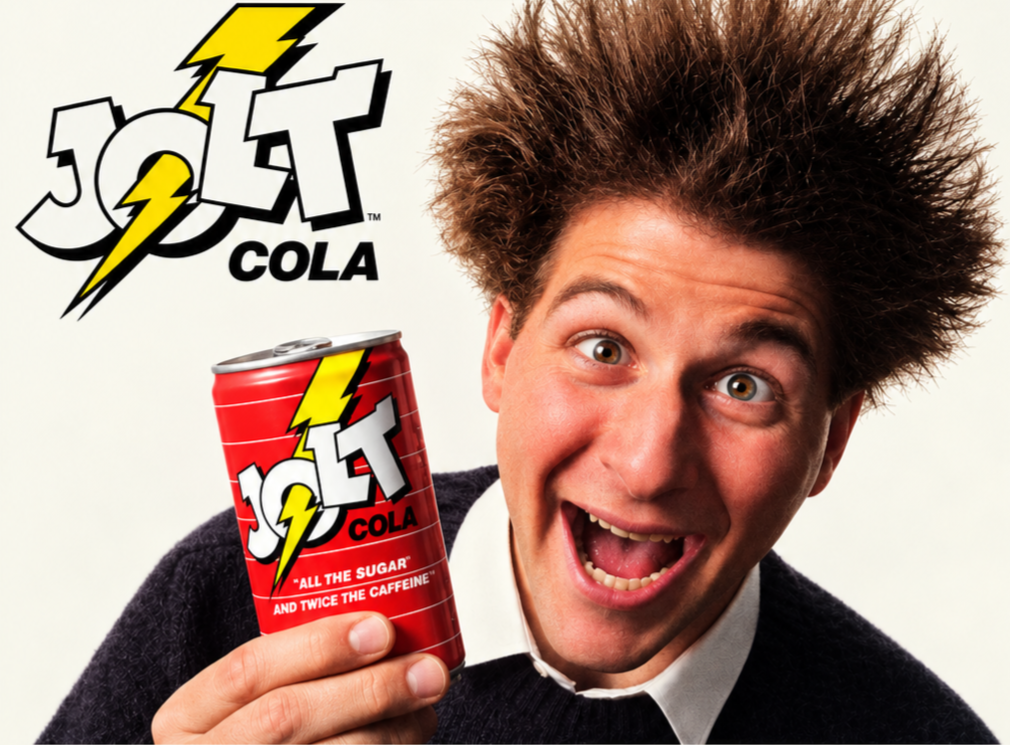
Picture 1995: a beige CRT monitor glowing, floppy disks everywhere, and a cold can sweating beside the keyboard like it just sprinted through a thunderstorm. That can is Jolt Cola, crowned with a giant yellow lightning bolt and absolutely allergic to pretending it is good for you. Its pitch was pure, unapologetic electricity: “All the sugar and twice the caffeine!” No wellness promises. No sleek lifestyle branding. Jolt looked you straight in the eyes and said, “You have work to do. Drink this.”
Created in 1985 by C.J. Rapp, Jolt arrived before Red Bull and Monster transformed caffeine into a beverage empire. It was already doing something that would eventually become an entire industry: selling a drink specifically for people who wanted to stay awake. College students, computer nerds, gamers and night owls found it quickly, and Jolt became the beverage equivalent of a desk covered in pizza boxes.
Then Hollywood gave the lightning bolt a starring role. Jolt appeared in Wayne’s World, Dennis Nedry had it on his desk in Jurassic Park, and the 1995 movie Hackers featured characters guzzling it. Suddenly, Jolt was more than a caffeinated soda. It looked like the official drink of computers, gaming and people who knew far too much about the internet. There was also a wonderfully appropriate twist: Jurassic Park helped propel Jolt into pop culture, but Nedry himself didn’t have a long future. By the end of the movie, the guy drinking Jolt was, well, extinct.
Jolt’s caffeine and sugar content attracted criticism, particularly around young consumers, but controversy rarely hurts a product whose personality is built around being a little irresponsible. If anything, Jolt seemed perfectly happy being the soda your mother would rather you did not buy.
Then the energy-drink revolution arrived. Red Bull hit the U.S. market in the late 1990s with tiny cans, extreme sports and a polished version of the same basic proposition. Jolt tried to fight back on its own terms, including a giant resealable can shaped like a battery. The idea was perfect. The economics were not. The custom cans reportedly cost up to three times more than standard cans, and Jolt was committed to buying a million of them. The can looked like a battery. Unfortunately, it also cost like one.
That packaging gamble helped push the company into trouble. In 2009, Jolt’s parent company filed for bankruptcy after becoming entangled in the costly canning agreement. The brand returned through Dollar General in 2017, but that comeback eventually fizzled too. Jolt had gone from being the future of wired-up youth culture to something people spotted in an old movie and immediately said, “Holy crap, I remember that.”
Then Jolt pulled the strangest trick of all: it came back again. REDCON1 revived the brand in 2024, turning the old sugar-and-caffeine formula into a modern zero-sugar energy drink with 200 milligrams of caffeine in a 16-ounce can. In 2025, Root Beer joined the lineup, giving the old lightning bolt a decidedly modern makeover.
That’s what makes Jolt worth remembering. It arrived before energy drinks became a massive category, found its audience by being loud and unapologetic, became a pop-culture prop, nearly got shocked by its own packaging, disappeared, came back and somehow got another shot. For a soda that once looked like a relic of the computer age, Jolt has proven remarkably difficult to unplug.
Nibbles: Jolt reportedly went through 144 recipes before settling on its formula. That is a lot of caffeinated trial and error.
Discover more from Grubbits
Subscribe to get the latest posts sent to your email.