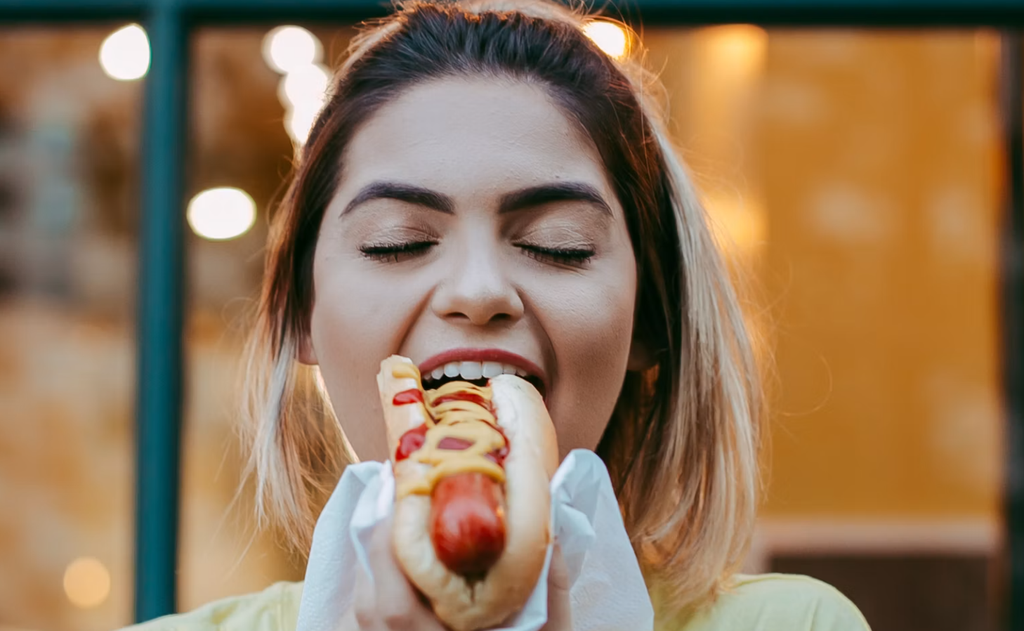
There are few sounds more humiliating at a ballpark than the mustard bottle farting all over your hot dog. You’ve got the game going, the crowd roaring, and you’re trying to add a respectable stripe of yellow to your lunch when suddenly the bottle lets out a violent little pfffft before launching mustard somewhere it was never supposed to go. Now you’re standing there holding a hot dog, wearing mustard and wondering if anyone saw it. But here’s the funny part: that little yellow disaster has a surprisingly big Canadian story behind it. The mustard in that bottle may have started life in the wide-open fields of the Canadian Prairies, where farmers grow the tiny seeds that keep condiment bottles around the world filled.
Canada is a major force in the mustard business, particularly when it comes to mustard seed. Saskatchewan is the heavyweight, accounting for the vast majority of Canada’s mustard-seeded area, with Alberta also contributing to the harvest. Canada has also been the world’s leading exporter of mustard seed, which means those tiny seeds grown on the Prairies eventually find their way into condiment bottles, spice blends and kitchens around the world. It’s one of those food facts hiding in plain sight. You can be standing at a baseball stadium, squeeze mustard onto a hot dog and have no idea that the story may have started on a farm thousands of kilometres away.
Canadian farmers aren’t just growing one kind of mustard, either. There are three major types, and each has its own culinary passport. Yellow mustard is the familiar workhorse behind the bright yellow condiment we squeeze onto hot dogs and burgers across North America. Brown mustard has a sharper, hotter bite and is widely used for European-style mustards. Then there’s oriental mustard, which is hotter still and is exported primarily to Asian markets for condiments, spice blends and cooking oils. One Canadian crop is quietly helping season several different food cultures around the world, which is a pretty impressive career for a plant most people only notice when it is sitting beside the ketchup.
Which brings us to Dijon. The name sounds completely French, and Dijon is famous for its mustard tradition, but Canadian mustard seed plays an important role in the European mustard industry. That makes for a wonderfully Canadian twist on something that sounds completely French. The next time you see an expensive-looking jar of Dijon mustard, remember that its journey may have started in a field thousands of kilometres away under the big Prairie sky.
Then there are those famous 1980s Grey Poupon commercials. Two wealthy-looking guys cruise around in their Rolls-Royces, one rolling down the window to ask, “Pardon me, would you have any Grey Poupon?” The commercials turned mustard into a ridiculous symbol of high-society sophistication, as though a jar of mustard suddenly required a chauffeur and a trust fund. Behind all that polished chrome and aristocratic nonsense, though, was a much simpler story involving farmers, fields and tiny mustard seeds.
Then there’s the hot dog. The 1904 St. Louis World’s Fair helped give the hot dog-and-mustard combination a major boost, with French’s introducing its yellow mustard at the fair and serving it with hot dogs. Baseball eventually turned the combination into a food ritual of its own: hot dog in one hand, mustard in the other and absolutely no concern about whether either one was going to end up on your shirt.
So the next time your mustard bottle makes that embarrassing little noise at the concession stand, don’t worry about it. You’re not just squeezing a condiment onto a hot dog. You’re participating in a food story that stretches from Saskatchewan fields to European mustard jars, 1980s Rolls-Royces and baseball stadiums. That little yellow bottle has travelled a lot farther than most of us ever will, and somehow it still ends up exactly where it belongs: on a hot dog, right before somebody squeezes it too hard.
Nibbles: Mustard doesn’t start out yellow and spicy. Crush the seeds and add liquid, and a chemical reaction creates the compounds responsible for that famous nose-clearing kick. Mustard literally makes its own heat.
Discover more from Grubbits
Subscribe to get the latest posts sent to your email.